

Buying land in Trinidad sounds simple. Find a piece of land you like, pay the seller, build your house. Done. In real life it is nothing like that. The land could have unpaid taxes from twenty years ago that you will inherit the day you sign. The seller might not even fully own it. The plan they show you might describe a totally different lot than the one you walked.
This guide walks you through the whole process the way I would explain it to a friend who is about to spend a few hundred thousand dollars and does not want to lose it. We will cover what to check before you commit, what fees you will pay, how attorneys actually charge, how the banks lend on bare land, and what scams to avoid.
If you are still deciding what kind of property to buy, start with our guides on freehold land vs leasehold and the legal process for buying property in Trinidad. Both are useful background for what follows.
Table of Contents
What does residential land actually cost in Trinidad in 2026?
Residential land prices in Trinidad in 2026 span a very wide range, from roughly TTD 300,000 for an inland lot in the deep south or east to over TTD 3 million per lot in the north-west corridor. The table below sets out indicative current bands for the main residential belts. Confirm against a live valuation before you budget.
| Region | Typical lot (sqft) | Indicative price (TTD) |
|---|---|---|
| North-west corridor (Maraval, Diego Martin, Westmoorings) | 5,000–10,000 | 1.5M – 3.5M+ |
| Chaguanas / central Trinidad | 5,000–7,500 | 600,000 – 1,000,000 |
| Arima and Churchill–Roosevelt corridor (D’Abadie, Arouca, Trincity) | 5,000–9,500 | 670,000 – 1,050,000 |
| San Fernando and southern corridor | 5,000–8,000 | 500,000 – 1,200,000 |
| Deep south and east (Penal, Barrackpore, Sangre Grande) | Variable | 300,000 – 700,000 |
| Gated developments (Highbury Park, Windsor Heights, similar) | 5,300–9,700 | 600,000 – 1,000,000+ (HOA from TTD 500–600/mo) |
Two dynamics shape these bands. First, six consecutive years of building-cost escalation have pushed a large share of would-be builders toward existing homes rather than new construction, which softens land demand at the top of the market and firms it at the bottom. Second, gated developments now supply a growing share of new residential land, bundling private security, electronic gates and shared infrastructure into the per-lot price. For a fuller view of live inventory, see the land for sale in Trinidad hub.
What to check before you put down a single dollar
Before you sign anything, confirm the seller actually owns the land, that no one else has a claim on it, that the Land and Building tax is paid, and that the WASA bill is current. Skip these checks and you can pay full price for land that comes loaded with someone else’s debt.
There are six things every land buyer in Trinidad should check before money changes hands.
1. Does the seller actually own the land? You verify this at the Registrar General’s Department, now operating through the Property Business Registration System (PBRS) online since April 2022. You can search by the seller’s name, the lot number, or the deed reference. A deed search lists every registered document tied to the property: who sold it last, when, for how much, and whether any mortgages or caveats are sitting on it. The government fee is $5 per page for an uncertified copy and $20 for a certified copy.
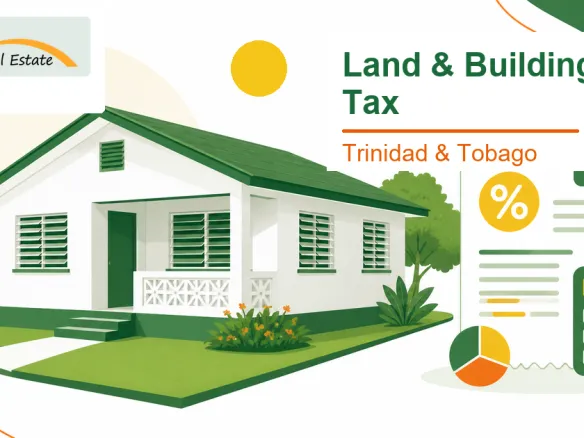
2. Is the Land and Building Tax paid up? Request a statement from the Inland Revenue Division (IRD). Outstanding L&B tax follows the land, not the previous owner. If you buy land with three years of arrears, you owe that money on day one.
3. Is the WASA bill paid? WASA bills attach to the property. Same problem as the tax. Unpaid water bills become your unpaid water bills. Ask the seller for a current WASA statement, then verify it directly with WASA before closing.
4. Does the land have legal road access? Walking onto a piece of land does not mean you have the legal right to drive onto it. Confirm the access road is recorded in the deed, not just used out of habit. Landlocked lots are common in Trinidad and they are nearly impossible to sell later.
5. Are there caveats, judgments, or pending court cases? The PBRS search picks up most of these. A “Lis Pendens” search shows pending lawsuits over the property. If anyone has a claim against the seller, your purchase could be undone after the fact.
6. What land system is it under? Trinidad runs two systems at the same time. Most land (around 80%) sits under the older Common Law system. The newer one is the Real Property Act, also called the Torrens system. Under the Real Property Act, the state guarantees ownership on a single Certificate of Title and any mortgage or caveat is endorsed on the back of that certificate. Under the Common Law system, your attorney has to trace an unbroken chain of deeds going back at least 20 to 30 years to a “good root of title”. Common Law land is more work to investigate and carries more risk.
Why you need a fresh land survey
Every land purchase needs a current cadastral survey done by a licensed Trinidadian land surveyor. The deed describes the boundaries on paper. The survey confirms those boundaries match the land in front of you. Without it, you can pay for a 5,000 square foot lot and later find out your neighbour’s fence is sitting on 800 square feet of what you thought you owned.
A licensed land surveyor in Trinidad will typically charge between TTD $4,000 and TTD $12,000 for a residential lot, depending on size, terrain, and how easy the boundary markers are to find. Bigger or steeper lots run higher. The surveyor produces a cadastral sheet showing the lot boundaries, neighbour boundaries, and any encroachments.
If the survey shows the actual land does not match what the deed describes, stop. Do not close. Either the boundaries get corrected with a new deed of rectification (which is a legal job and takes time) or you walk away.
Town and Country Planning checks
Just because someone is selling you “land” does not mean you are allowed to build a house on it. The Town and Country Planning Division (TCPD) controls what each piece of land can be used for. Check the zoning and the subdivision approval before you buy.
Zoning. Some land is zoned residential. Some is zoned agricultural. Some is in a watershed protection area where you cannot build at all. Request the planning history for the lot. If you buy agricultural land assuming you can put a house on it, you may find out too late that you cannot.
Subdivision approval. When a large parcel gets cut up into smaller lots, that subdivision needs TCPD approval. Many smaller parcels in Trinidad were cut up informally over the decades. If your lot is part of an unapproved subdivision, you may have trouble getting building permits, utility connections, or even reselling later. Ask the seller for the approved subdivision plan number. If they cannot produce one, that is a red flag.
Hire your own attorney, never the seller’s
You hire your own attorney. Not the seller’s attorney. Not the real estate agent’s preferred attorney. Your own. The attorney’s only loyalty should be to you and your purchase.
In Trinidad, attorney fees on land conveyances are set by the Attorneys-at-Law (Remuneration) (Non-Contentious Business) Rules 1997. The minimum for drafting an Agreement for Sale is TTD $1,500 if the land is unregistered (Common Law) and TTD $2,500 if it is registered (Real Property Act). On top of that, attorneys charge a scaling percentage of the purchase price for handling the conveyance itself.
The Agreement for Sale is the first major document. It sets the deposit amount (usually 10% in Trinidad), the closing date, what happens if either side backs out, and what defects the buyer is willing to accept. As of the Miscellaneous Provisions Act No. 17 of 2020, the Agreement for Sale itself does not have to be registered at the Land Registry. But the final Deed of Conveyance does, and only a practicing attorney can prepare and register it.
The fees you will actually pay
On top of the purchase price, expect to pay stamp duty, government registration fees, attorney fees, and the surveyor. Together these often add 5% to 10% on top of the land price. Budget for them before you make an offer, not after.
| Fee | Who you pay | Approximate amount (TTD) |
|---|---|---|
| Land surveyor | Licensed surveyor | $4,000 to $12,000 |
| Attorney (Agreement for Sale, unregistered) | Your attorney | $1,500 minimum |
| Attorney (Agreement for Sale, registered) | Your attorney | $2,500 minimum |
| Attorney (conveyance) | Your attorney | Scaling percentage of purchase price |
| Stamp duty | IRD | Tiered by purchase price |
| Land Registry fee | Registrar General | Based on document type |
| Certified copy of deed | Registrar General | $20 certification + $5 per page |
Stamp duty on land only is calculated on tiered bands set by the Finance Act. The first-time buyer exemption applies to land with a dwelling on it, not to bare land. So if you are buying a vacant lot, you owe stamp duty from the first dollar. Your attorney will calculate the exact amount based on the agreed purchase price.
How banks lend on bare land
Bank financing on bare land is harder to get than financing on a house. Terms are shorter and you usually need a bigger deposit. Most Trinidadian banks treat bare land as a higher-risk asset because if you default, the bank has to sell empty land, which is harder than selling a finished home.
If you cannot pay cash, here is what to expect from the major lenders:
- Banks that lend on bare land: Republic Bank, RBC Royal Bank, Scotiabank, First Citizens, and TTMF have all financed land purchases. Each bank applies its own conditions and the appetite changes year to year.
- Loan-to-value: Most banks cap land loans at 60% to 75% LTV, meaning you need to bring 25% to 40% of the purchase price as a deposit. That is much higher than the 10% to 15% common on a home loan.
- Term: Land loans usually run 10 to 15 years, sometimes 20. Compare to home loans which run 25 to 30 years.
- Rate: Interest rates on land loans typically sit 1% to 2% higher than home loan rates.
HDC and TTMF. The Housing Development Corporation does not sell bare land to the public. Trinidad and Tobago Mortgage Finance (TTMF) offers land loans, often with slightly better terms than the commercial banks if you meet the income criteria.
If the math on financing does not work, the safest move is to save longer and pay cash for the land, then take a construction loan later when you are ready to build.
From signed agreement to registered deed
Signing the Agreement for Sale is not the end. The conveyance, where the Deed of Conveyance is prepared, signed, stamped, and registered at the Land Registry, takes 6 to 12 weeks on a clean transaction. Until that deed is registered, you do not legally own the land.
The closing sequence on a straightforward land purchase looks like this:
- Sign Agreement for Sale. You pay the deposit (usually 10%) into your attorney’s escrow account. Closing date is set.
- Attorney completes searches. Your attorney runs the deed search, confirms title, and prepares the Deed of Conveyance.
- Bank financing finalized (if applicable). The bank issues a letter of commitment. The mortgage deed is prepared in parallel with the conveyance.
- Closing day. You pay the balance. You sign the Deed of Conveyance. The seller signs over the land.
- Stamp duty paid. Your attorney takes the deed to the IRD and pays the stamp duty.
- Deed registered. Your attorney lodges the deed at the Land Registry through the PBRS.
- You receive a certified copy. Once registered, you receive a copy of the registered deed bearing the Registrar General’s seal.
Until step 6 is complete, the deed is not registered. “Lodged but not yet registered” is a real and common state in Trinidad. Confirm the registration with your attorney by getting a search result that shows your deed on the title chain.
What to do after you own the land
Owning the land is just the beginning. Three quick tasks after closing.
- Register for Land and Building Tax at the IRD in your name. The previous owner’s L&B tax record needs to be updated.
- WASA and T&TEC connections. Connecting water and power to a bare lot takes weeks and costs money. WASA requires an application, a deposit, and a site visit. T&TEC may require running new lines from the nearest pole, which on a remote lot can cost tens of thousands of TTD.
- Property insurance for vacant land. Some insurers offer liability cover for vacant land (in case someone gets hurt on your property). Premiums are low. Worth considering if the lot is near a road or pathway.
Scams and red flags to watch for
Most land scams in Trinidad fall into four buckets: squatters, family land disputes, forged deeds, and state land being sold as private land. Knowing the warning signs protects you.
Squatters and adverse possession. Land that has been unfenced and vacant for years sometimes has squatters living on a corner of it. Under Trinidadian law, a squatter who has occupied land openly and without challenge for 16 years can claim adverse possession. If your lot has anyone living on any part of it, resolve this before closing, not after.
Family land. A lot of land in Trinidad sits in undivided estates. One heir tries to sell the whole property even though several siblings or cousins have a legal share. The sale is voidable, meaning the other heirs can come back later and challenge it. Always ask if the seller’s title comes through inheritance, and if so, confirm that all the heirs have signed off.
Forged deeds. It happens. Someone fabricates a deed for land they do not own, then sells it to an unsuspecting buyer. The PBRS search will pick up a missing chain of title if you read the results carefully. Trust your attorney to spot the gaps.
State land sold as private land. Some sellers sell pieces of state land they have been occupying as if it were their own. This is where the Land Status Letter from the Lands and Surveys Division (Ministry of Agriculture, Land and Fisheries) comes in. The letter officially confirms whether the parcel is state land or private land. Application takes 8 to 12 weeks and is worth every cent on any lot that does not have a clean deed history.
Frequently asked questions
Can a foreigner buy land in Trinidad?
Yes, but with limits. Under the Foreign Investment Act, a foreigner can hold up to 1 acre of land for residential use and up to 5 acres for commercial use without a License to Hold Land. Above those thresholds you need a license from the Ministry of Finance. Trinidad and Tobago citizens living abroad do not face this restriction.
How much deposit do I need to buy land?
The standard deposit on a private land purchase in Trinidad is 10% of the purchase price, paid into your attorney’s escrow account when you sign the Agreement for Sale. If you are also borrowing from a bank, the bank may require an additional 25% to 30% of the purchase price as your equity contribution.
Can I build immediately after buying?
Not without permits. You need a Town and Country Planning approval and a building permit from your Regional Corporation before construction starts. Even if the land is zoned residential, you still need plan approval. Budget 3 to 9 months to get permits through, depending on the complexity of your design.
What if the land floods?
Flood risk is one of the biggest unspoken issues in Trinidadian land sales. Visit the lot in the rainy season (June to December) before you commit. Talk to neighbours. Check the Water Resources Agency flood maps. Insurance will not cover a property in a known flood zone without a substantial premium loading, if at all.
Do I need a real estate agent to buy land?
No. Real estate agents in Trinidad usually represent the seller. You can buy land directly from a private seller without an agent and save the commission. What you absolutely need is your own attorney and your own surveyor. An agent is optional. An attorney is not.
How long does the full process take?
On a clean transaction with no surprises, expect 8 to 16 weeks from signed Agreement for Sale to registered deed. Common Law land tends to take longer than Real Property Act land because of the deeper search work. Add another 4 to 8 weeks if bank financing is involved.
Can I back out after signing the Agreement for Sale?
You can, but you will likely forfeit your deposit. The standard Agreement for Sale in Trinidad has a “time is of the essence” clause and treats the deposit as forfeit if the buyer pulls out without a contractual reason. Make sure your attorney builds in the right contingencies before you sign.
What if the seller dies before closing?
The estate has to be probated before the sale can proceed. This can add months or years to the timeline. Your Agreement for Sale should include a clause covering this, including the return of your deposit if the estate cannot deliver title within a reasonable period.
Can I buy land through a company instead of in my personal name?
Yes. Many investors register a limited liability company specifically to hold land. Advantages: liability protection, easier estate planning, potential tax structuring. Disadvantages: ongoing company costs, more compliance work. Discuss with both your attorney and an accountant before deciding.
Is buying land cheaper than buying a house?
On the purchase price, yes. On the total cost to live on it, usually no. Once you add the cost of building, utility connections, permits, contingency, and the time during construction, building on bare land often costs more than buying an equivalent finished home. Run the full math before assuming land is the cheaper route.
Is agricultural land cheaper than residential land in Trinidad?
Agricultural land is typically cheaper per acre than residential, but converting it to residential use is neither guaranteed nor fast. A change-of-use application through Town and Country Planning can take years, and the outcome depends on regional development plans. If your intent is a home rather than a farm, buy residential-zoned land from the outset.
Can I buy state land from the Land Settlement Agency?
The Land Settlement Agency (LSA) manages regularisation and allocation of state land, primarily aimed at existing occupants of state-owned parcels rather than open-market buyers. Speculative purchase of state land through the LSA is not a standard route; if you’re looking at LSA-adjacent stock, work with an attorney who has direct LSA experience.
Ready to start looking?
Browse land for sale in Trinidad on our listings. When you find a parcel that interests you, come back to this guide and work through every check before you make an offer. Skipping a single step has cost real Trinidadian buyers real money. Doing it right takes longer but protects what you are putting in.



Join The Discussion