
Quick Answer
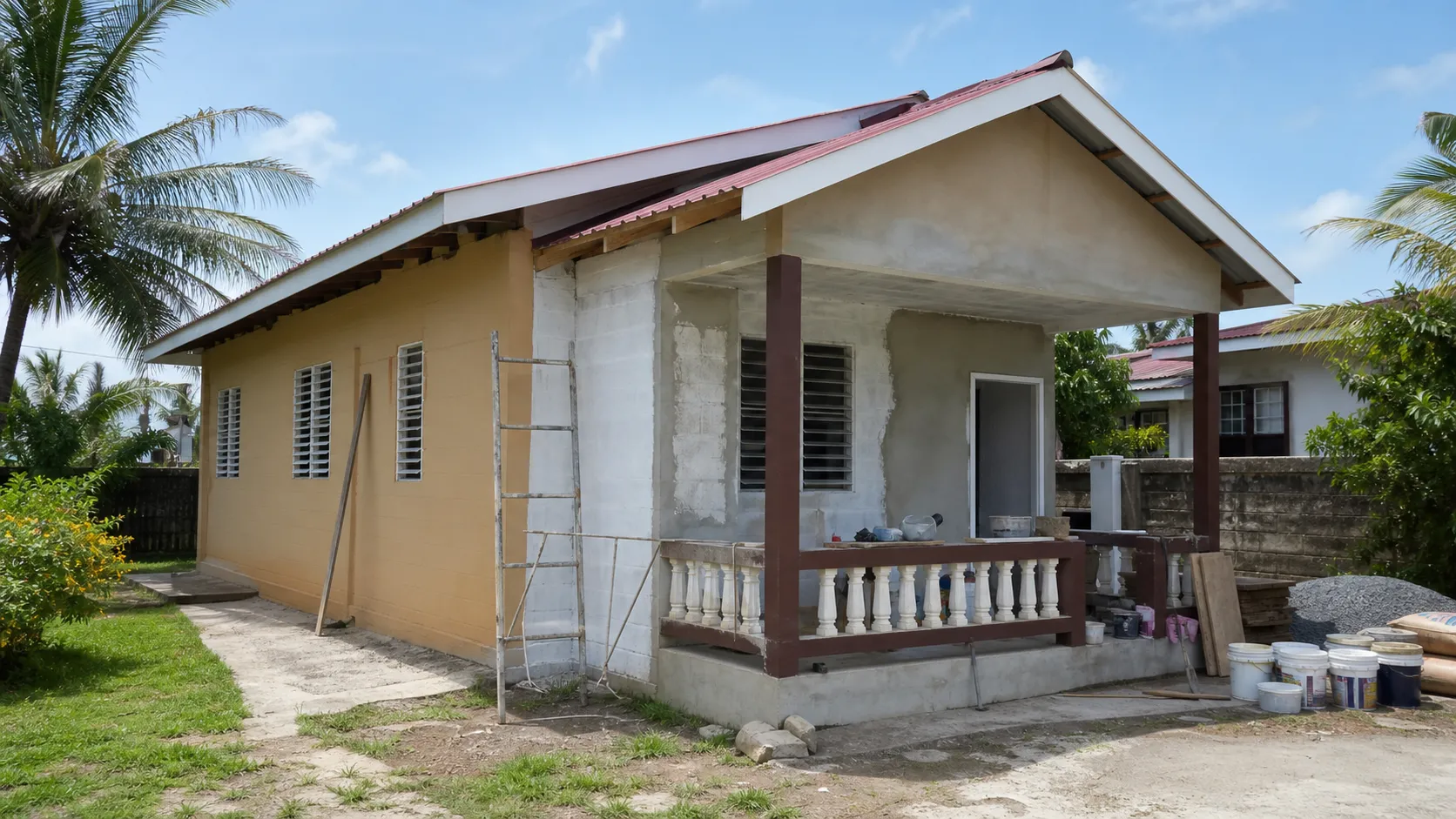
A fixer-upper in Trinidad is a residential property priced 15 to 30% below comparable turn-key homes, with the discount reflecting deferred maintenance, cosmetic work, or structural repairs that the buyer agrees to take on after purchase.
Gut renovations in Trinidad run TTD $100 to $150 per square foot, and licensed trades cost TTD $450 to $700 per day for electricians and plumbers. Add a 15% contingency on every budget for hidden problems. Government support is available: the Home Improvement Grant provides up to TTD $15,000 (no repayment) for households earning $5,000 per month or less, and the Home Improvement Subsidy offers a matching TTD $20,000 for households earning up to $120,000 per year. Stamp duty is 0% on properties priced up to TTD $850,000 — which covers most fixer-upper entry points in Central Trinidad and along the East-West Corridor.
Use the live houses for sale in Trinidad hub to compare fixer-upper discounts against move-in-ready houses in the same area before you price renovation risk.
Table of Contents
What makes a fixer-upper a smart buy in Trinidad right now?
The Trinidadian market entering 2026 has a clearly defined supply problem at the affordable end: demand for properties under TTD 1 million is high, but turn-key supply is constrained. That gap is where fixer-uppers live.
Buyers willing to accept a property in its current condition can access neighborhoods that would otherwise be out of reach. A structurally sound but cosmetically tired three-bedroom in Arima or Cunupia might list at TTD $600,000 to $800,000 while a renovated equivalent in the same street trades at TTD $1.1 million or more. The difference between those two numbers — minus the renovation cost — is the buyer’s equity on day one.
The strategy works best in stable middle-class corridors where renovated homes are in genuine demand: Chaguanas and its surrounding Lange Park and Kensington Gardens developments, the Tunapuna and Arima belt along the East-West Corridor, and Petit Valley and Maraval for buyers targeting the North-West. Central Trinidad offers the widest selection at the most accessible price points, supported by Digicel and TSTT infrastructure buildout and commuter road access to Port of Spain.
For buyers who qualify, you can find homes for sale in Trinidad including distressed and below-market listings across all these corridors.
Where do you find fixer-upper properties in Trinidad?
Fixer-uppers come through two distinct channels, and the best opportunities tend not to appear in standard classified listings.
Bank mortgagee sales are the most structured source. When a mortgagor defaults, the lending institution exercises its power of sale and offers the property “as-is-where-is,” with no warranty on condition and no price negotiation in the conventional sense. TTMB, Scotiabank, and First Citizens all maintain active portfolios of these assets. Scotiabank routes inquiries through a panel of accredited agents; the buyer submits a written bid, pays a 10% deposit within 14 days of acceptance, and closes within 90 days.
For a full walkthrough of the bank auction and bidding process, see our guide to buying a foreclosed home from a bank in Trinidad.
Private distressed sales are less structured but equally productive. Aging homes in older residential developments often accumulate deferred maintenance to the point where standard mortgage lenders won’t finance the property in its current state. This pushes the seller toward cash buyers or buyers who can self-fund an initial renovation. Probate sales and inherited properties — where heirs want a fast liquidation rather than the full market process — also fall into this category. A local agent who specializes in distressed inventory is your best route into this pipeline.
How do you tell the difference between a cosmetic fix and a structural problem?
This is the most important question a fixer-upper buyer in Trinidad needs to answer before signing anything.
Cosmetic repairs — new paint, tiling, kitchen cabinets, bathroom fittings, landscaping — are predictable in cost and scope. They don’t threaten the long-term value or safety of the building.
Structural problems are a different category entirely. In a tropical climate, the three most serious are termite damage, foundation movement, and chronic water infiltration.
Termites are the top concern. Trinidad has two species that attack residential structures:
| Termite type | How they enter | Key signs |
|---|---|---|
| Subterranean | Soil contact, through cracks in concrete slabs | Mud tubes (pencil-width tunnels) on walls and floor beams |
| Drywood | Direct entry into wood; no soil needed | “Frass” (pellet-like droppings), kick-out holes in rafters and window frames |
The tap test is reliable: knock on wooden structural members and listen for a hollow or papery sound. Intact wood resonates solidly. Termite-consumed wood sounds dead even when the painted surface looks fine. Commission a licensed pest inspector before you sign an Agreement for Sale.
Water damage follows termites in frequency. Check these specifically:
- Roof and gutters: Look for sagging, separated gutters, and water stains on fascia boards or ceiling boards in the upper floor.
- Foundation and grading: The land around the house should slope away from the foundation. Soil graded toward the building pools water against the wall and leads to moisture infiltration and eventual subsidence.
- Box drains: In communities near the Caroni River basin or the South Oropouche watershed, blocked or silted box drains are a primary cause of interior flooding. Walk the perimeter after heavy rain if possible.
Foundation cracking tells its own story. Vertical hairline cracks are typically settlement and not urgent. Horizontal cracks in concrete block walls, or stair-step cracks running along mortar joints, indicate active movement and require a structural engineer’s assessment before you budget any renovation.
What legal checks must you complete before buying a distressed property?
Trinidad operates two land registration systems. Properties on the Common Law system are transferred by Deed of Conveyance, and your attorney must trace title back 20 to 30 years to establish a clean chain. Properties on the Real Property Act system carry a Certificate of Title with all encumbrances recorded directly on the document. Fixer-uppers and older homes are more likely to be Common Law titles, so budget for the extra search time.
Before you pay the standard 10% deposit into escrow and sign the Agreement for Sale, your attorney must complete:
- Title search: confirms the vendor’s right to sell and reveals any registered judgments, mortgages, or liens.
- WASA clearance certificate: vacant or neglected properties accumulate water and sewerage arrears. The vendor must clear these before closing; they do not transfer to the buyer.
- Property Tax and Land and Building Tax: verify all taxes are current. After registration of your new deed, you update the records at the Board of Inland Revenue (BIR) as the new owner.
- Town and Country Planning approvals: any unauthorized extension or structural addition — a second floor added without permission, a garage converted to a bedroom — can trigger an enforcement notice. Check that all completed works have TCPD approval before you buy.
Stamp duty on a residential purchase is 0% up to TTD $850,000. First-time buyers purchasing a house and land package are fully exempt up to TTD $1.5 million, which covers a substantial range of renovated fixer-upper values.
How much does it cost to renovate a house in Trinidad?
Renovation costs in Trinidad vary by scope. Use these benchmarks to build your budget:
| Scope | Description | Estimated cost (TTD) |
|---|---|---|
| Cosmetic refresh | Paint, tiling, kitchen units, bathroom fittings | $50,000 to $150,000 |
| Mid-range | Cosmetic + roof repair + electrical upgrade | $150,000 to $400,000 |
| Gut renovation | Full strip to structure: rewire, repipe, new roof, new finishes | $100 to $150 per square foot |
A 1,200 sq ft house at the mid-point of that gut renovation range costs approximately TTD $150,000 to $180,000 in materials and labor alone. A 2,000 sq ft house could reach TTD $250,000 to $300,000.
Current labor rates for licensed tradespeople in Trinidad:
| Trade | Daily rate (TTD) |
|---|---|
| General laborer | $150 to $250 |
| Mason / bricklayer | $300 to $500 |
| Carpenter (finish and trim) | $350 to $550 |
| Licensed electrician | $450 to $700 |
| Licensed plumber | $450 to $700 |
If you engage a general contractor to manage the project, budget an additional 10% to 15% of the total build cost as their management fee.
Always hold a 15% contingency. Behind walls and under floors, fixer-uppers routinely reveal corroded galvanized pipes, concealed termite galleries, and electrical splicing that fails modern code. Projects that run short of contingency funds stall mid-renovation — and a half-completed house costs more to insure and far more to sell.
What financing is available to buy and renovate a fixer-upper in Trinidad?
Several products exist for this specific scenario:
Commercial renovation loans: Scotiabank’s Home Builder Loan allows interest-only payments during the construction phase, easing cash flow until the project completes. First Citizens’ loan program allows borrowing up to TTD $350,000 with a term of up to seven years, suitable for mid-range renovations. Republic Bank’s Build Easy Loan covers foundation to interior upgrades.
Government grants (no repayment required):
| Program | Maximum | Income ceiling | Key use |
|---|---|---|---|
| Home Improvement Grant (HIG) | TTD $15,000 | Household income ≤ $5,000/month | Roof, electrical, plumbing |
| Home Improvement Subsidy (HIS) | TTD $20,000 (matching) | Household income ≤ $120,000/year | Structural work and conversions |
For households that qualify for the HIG, the grant covers a meaningful share of basic safety repairs — a full roof replacement on a small house or a complete electrical panel upgrade and partial rewire. The HIS matching subsidy can be layered with a commercial loan for buyers in the middle-income bracket.
A real estate agent in Trinidad familiar with distressed property sales can also advise on which properties are already TTMB-approved or pre-qualified for renovation financing, which shortens the acquisition timeline considerably.
Do you need planning permission to renovate a fixer-upper in Trinidad?
It depends on the scope of work. Internal changes that do not alter the building’s exterior footprint, height, or use do not require Town and Country Planning Division (TCPD) approval. Painting, tiling, and internal partitioning fall into this category.
Any structural addition, including a new room, an extended floor plan, or a garage conversion, is classified as “development” and requires TCPD planning permission before work begins. Applications go through the DevelopTT portal, with a typical processing window of 60 days for final permission.
The relevant Municipal Corporation issues the Building Permit separately, which authorizes commencement of structural or major renovation work. On completion, the Corporation conducts a final inspection and issues a Completion Certificate. This certificate is required to update your property insurance and property tax records. Buying a fixer-upper with unauthorized additions and then applying for retrospective approval is possible but adds cost and time — factor it into your due diligence before agreeing on a price.




Join The Discussion